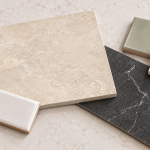
Rectified tiles are precisely cut for straighter edges, cleaner lines, and a more polished finished look. This matters if you want smaller grout lines and a cleaner, more seamless appearance. However, careful installation is essential to achieve the best result.
Most tiles look straight at first glance, but small differences in size are normal after they are made. Rectified tiles go through one additional step: their edges are trimmed after firing so the pieces are more consistent. This helps the installer create straighter, more even lines across the finished surface.
That cleaner appearance is the main reason customers choose rectified tile. With smaller grout joints, the eye focuses more on the tile and less on the lines between each piece. This can be especially attractive with large-format tiles or designs that imitate marble, stone, or concrete.
However, rectified does not mean grout-free. Every tile installation still needs grout joints, and the correct width depends on the tile, the surface, and the installer’s recommendation. The floor or wall must also be properly prepared because narrow grout lines can make uneven areas or installation mistakes easier to notice. A tile-leveling system can help reduce uneven edges between tiles, making the installation faster and the finished surface cleaner.
I usually recommend rectified tile when a customer wants a clean, modern, and more continuous look. But I would not choose a tile only because it is rectified. The color, finish, size, intended use, and quality of the installation are just as important.